
Table of Contents
Gold uses 'troy ounces' - and they're not the same as regular ounces. If you've ever looked at gold prices and wondered why the weight system seems different, you're onto something important. A troy ounce weighs about 10% more than the ounce you'd use to measure flour or sugar. This isn't a quirk or mistake - it's a measuring system that's been used for precious metals since medieval times. Getting this wrong can cost you serious money. Imagine buying what you think is 100 ounces of gold, only to receive 100 troy ounces - a difference of nearly 3 grams per ounce, or about 300 grams total. At today's prices, that's thousands of dollars. Let's break down exactly why precious metals have their own measurement system and how to navigate it confidently.
1Troy Ounce vs Regular Ounce: The Numbers
The difference between troy and avoirdupois (regular) ounces isn't subtle. When dealing with precious metals, using the wrong system can throw off your calculations by more than 10%.
The Exact Measurements
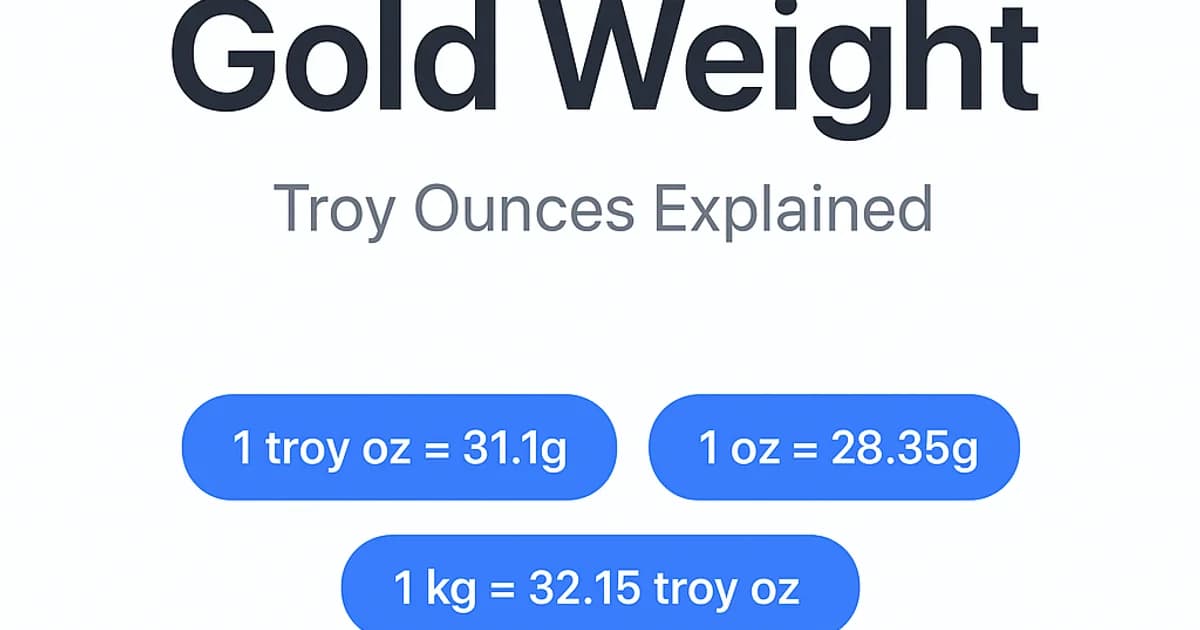
A troy ounce weighs 31.1035 grams. A regular (avoirdupois) ounce weighs 28.3495 grams. That means a troy ounce is about 2.75 grams heavier - roughly 9.7% more. Here's where it gets interesting: while troy ounces are heavier than regular ounces, a troy pound is actually lighter than a regular pound. A troy pound contains only 12 troy ounces (373.24g), while a regular pound has 16 ounces (453.59g).
Why This Matters for Gold Prices
When you see gold quoted at $2,000 per ounce, that's per troy ounce. If you mistakenly calculate using regular ounces, you'll underestimate the actual price per gram by nearly 10%. For a standard gold bar (400 troy ounces), that's a massive difference. One 400 troy ounce bar weighs 12.44 kilograms - if you calculated using regular ounces, you'd expect only about 11.34 kg.
Quick Mental Math
Need a fast conversion? Troy ounces to grams: multiply by 31. Grams to troy ounces: divide by 31. For more precision, use 31.1 as your multiplier. This gets you within 0.3% accuracy - close enough for most quick calculations.
2The History Behind Troy Weight
The troy system didn't come from Troy, the ancient city. Its origins are more practical and commercial, tied to medieval trade fairs that shaped how we still measure gold today.
Troyes, France: The Birthplace
The name comes from Troyes, a city in northeastern France. During the Middle Ages, Troyes hosted massive trade fairs where merchants from across Europe gathered. These fairs needed standardized weights for trading precious metals and gems - and the local system became the international standard. By the 1400s, the troy weight system had spread throughout Europe.
Why Create a Separate System?
Precious metals needed more precision than everyday goods. A small error when weighing grain might mean a few extra kernels. A small error when weighing gold meant real money. The troy system, with its smaller pound (12 ounces instead of 16), actually made calculations simpler for jewelers and goldsmiths who worked with smaller quantities. The number 12 divides evenly by 2, 3, 4, and 6 - making it easier to split into halves, thirds, and quarters.
Official Adoption
England officially adopted the troy ounce for coinage in 1527. The United States followed suit, and the troy ounce became the official measure for US gold and silver coins. The London Bullion Market Association still uses troy ounces today - it's the global standard for precious metals trading.
3Gold Bars and Standard Weights
When you hear about 'gold bars,' there are actually several standard sizes used around the world. Each serves a different purpose in the gold market.
The 400 Troy Ounce 'Good Delivery' Bar
The most famous gold bar is the 400 troy ounce bar used in international trading. These 'Good Delivery' bars are what central banks store and what gets traded on the London market. Each bar weighs between 350 and 430 troy ounces (the 400 is an average), must be at least 99.5% pure gold, and weighs roughly 12.4 kilograms. At $2,000 per troy ounce, one bar is worth about $800,000.
Smaller Investment Bars
For individual investors, gold comes in much smaller sizes: 1 troy ounce (31.1g) - the most common investment size, 10 troy ounces (311g), 1 kilogram (32.15 troy ounces), and 100 gram bars. The 1-ounce bars and coins are popular because they're easy to trade and store. The premium over spot price is higher per ounce for smaller bars, but the total investment is more manageable.
Gold Coins
Many gold coins contain exactly 1 troy ounce of gold, though some historic coins use different weights. The American Gold Eagle contains 1 troy ounce of pure gold but actually weighs 1.0909 troy ounces total (it's 91.67% gold, with copper and silver added for durability). The Canadian Maple Leaf and Australian Kangaroo are 99.99% pure and weigh exactly 1 troy ounce.
4Other Precious Metals and Their Weights
Gold isn't alone in using the troy system. Silver, platinum, and palladium all follow the same rules - with some interesting variations.
Silver: Same System, Different Prices
Silver is also measured in troy ounces. A 1,000 troy ounce silver bar (about 31.1 kg) is a common trading unit. Silver's lower price per ounce means the weight matters more in practical terms - a $30,000 investment in silver weighs a lot more than the same investment in gold.
Platinum and Palladium
These metals also use troy ounces. Platinum is denser than gold (21.45 g/cm3 vs 19.32 g/cm3), so a 1 troy ounce platinum coin is noticeably smaller than a gold coin of the same weight. This density difference can help identify fake gold - if a 'gold' coin is the wrong size for its weight, something's off.
The Jewelry Exception
While bullion uses troy ounces, jewelry weight can be more confusing. Some jewelers weigh pieces in grams, others in pennyweights (1/20 of a troy ounce, or 1.555g), and some still use carats for gemstones. When buying gold jewelry, always confirm whether the quoted weight is for the gold content only or the entire piece including stones.
Pro Tips
- 1Troy ounce to grams: multiply by 31.1 (1 troy oz = 31.1035g)
- 2Grams to troy ounces: divide by 31.1 (100g = 3.215 troy oz)
- 3A 400 troy oz gold bar weighs 12.44 kg, not 11.34 kg (the regular ounce mistake)
- 4Gold coins marked '1 oz' mean 1 troy ounce - expect 31.1g of pure gold content
- 5Troy pounds have 12 ounces, not 16 - so 1 troy pound = 373.24g
The troy ounce system has survived for over 600 years because it works. It provides the precision that precious metals demand and the standardization that international markets need. Whether you're buying your first gold coin or managing a larger portfolio, understanding the difference between troy and regular ounces keeps you from making costly mistakes. Remember: gold prices are always in troy ounces, one troy ounce equals 31.1 grams, and a standard 'Good Delivery' bar weighs 400 troy ounces (about 12.4 kg). Use our troy ounce converters to switch between units confidently - and never confuse your ounces again.