

Table of Contents
You followed the American recipe exactly. Same ingredients, same oven temperature, same baking time. Yet your cake came out dense while the original looked fluffy and perfect. What went wrong? The answer lies in a importante difference between how Americans and Europeans measure ingredients. A "cup" of flour can vary by 30% depending on how you scoop it, while grams are always precise. Professional pastry chefs never use cups - and after reading this, you'll understand why.
1The Hidden Problem with Cup Measurements
When a recipe says "1 cup of flour," it sounds simple. But here's what most home bakers don't realize: the weight of that cup depends entirely on how you fill it.
The Scoop vs. Spoon-and-Level Debate
If you scoop flour directly from the bag, you'll compress it. That "cup" could weigh 140-150 grams. If you spoon flour into the cup and level it off, you'll get closer to 120-125 grams. That 20-30 gram difference might not sound like much, but in baking, it's the difference between a tender crumb and a doorstop.
Why Baking Is Chemistry
Unlike cooking, baking is precise chemistry. The ratio of flour to liquid to fat to leavening must be exact for the chemical reactions to work. Too much flour? Your cookies spread less and taste dry. Too little? They might not hold their shape. Professional bakeries use scales for this reason - there's no guesswork.
2The Complete Ingredient Conversion Chart
Here's what 1 US cup actually weighs for common baking ingredients. Print this out and stick it on your fridge.
Dry Ingredients
All-purpose flour: 125g | Bread flour: 130g | Cake flour: 115g | Whole wheat flour: 135g | Granulated sugar: 200g | Brown sugar (packed): 220g | Powdered sugar: 120g | Cocoa powder: 85g | Cornstarch: 120g | Almond flour: 95g | Oats (rolled): 90g | Rice (uncooked): 185g
Wet and Semi-Wet Ingredients
Butter: 227g (2 sticks) | Vegetable oil: 220g | Honey: 340g | Maple syrup: 315g | Milk: 245g | Heavy cream: 240g | Sour cream: 240g | Greek yogurt: 245g | Peanut butter: 260g | Cream cheese: 225g
Mix-Ins and Extras
Chocolate chips: 175g | Chopped nuts: 120g | Shredded coconut: 85g | Raisins: 145g | Dried cranberries: 120g
3Why Different Ingredients Have Different Weights
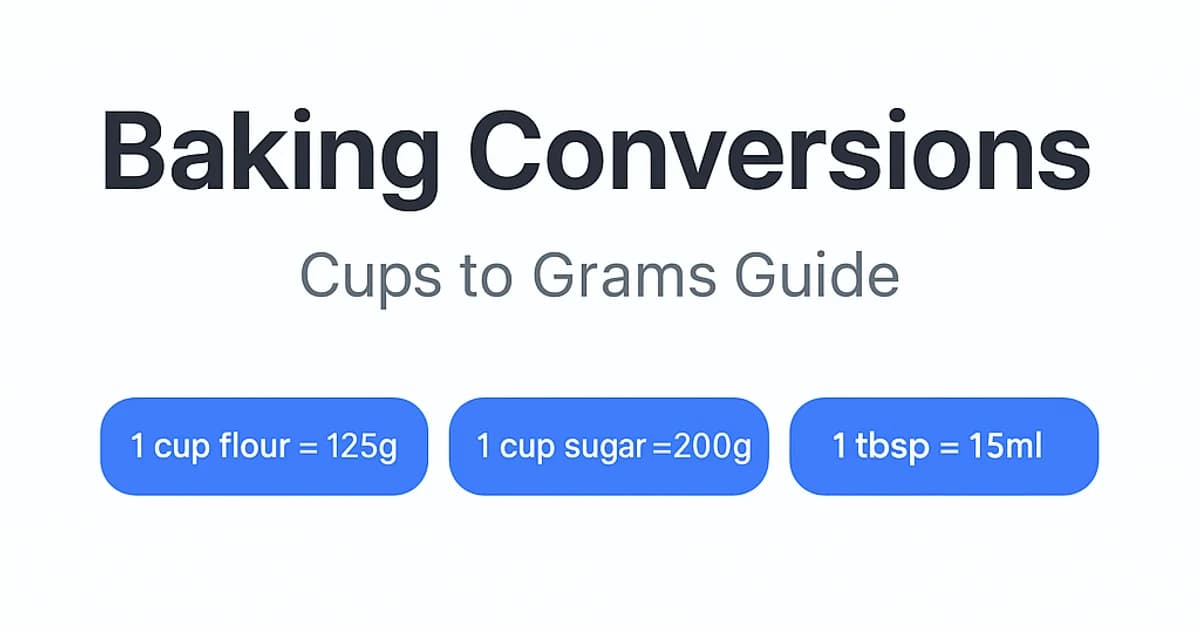
Notice how 1 cup of flour weighs 125g but 1 cup of sugar weighs 200g? It's all about density and particle size.
The Density Factor
Sugar crystals are denser and pack together more tightly than flour particles. Honey is even denser - a cup weighs a whopping 340g. This is why you can't just substitute by volume. Swapping 1 cup sugar for 1 cup honey would completely change your recipe.
Air Matters Too
Sifted flour weighs less than unsifted because of the air incorporated. If a recipe says "1 cup sifted flour," sift first, then measure. If it says "1 cup flour, sifted," measure first, then sift. Yes, this matters.
4Quick Conversion Tips for Everyday Baking
Don't want to memorize everything? Here are practical shortcuts that work 90% of the time.
The Flour Rule of 125
For most white flours, remember 125g per cup. This includes all-purpose, cake flour, and pastry flour. Bread flour and whole wheat are slightly heavier at 130-135g.
The Sugar Rule of 200
Granulated white sugar is almost exactly 200g per cup. Brown sugar (packed) is about 220g. Powdered sugar is lighter at 120g due to the added cornstarch.
The Butter Stick Trick
In the US, butter comes in sticks with measurements printed on the wrapper. One stick = 1/2 cup = 113g. This is one area where American packaging actually helps.
Pro Tips
- 1Buy a digital kitchen scale (they cost less than a bag of specialty flour)
- 2For old recipes: 1 cup flour ~ 125g, 1 cup sugar ~ 200g
- 3When a recipe gives both cups and grams, always use grams
- 4Weigh ingredients into the same bowl when possible (tare between each)
Professional bakers around the world measure by weight for a reason: precision leads to consistent results. Once you start using a kitchen scale, you'll wonder how you ever baked without one. The investment pays for itself in saved ingredients from failed recipes. And when you do convert old family recipes from cups to grams, you'll finally achieve the consistent results that seemed impossible before.